Welcome to
Maxillo Montreal
Centre de chirurgie
buccale et implants dentaires
Oral and Maxillofacial Surgery Clinic
We have been serving Greater Montreal, Laval, Western Quebec and Eastern Ontario since 1999.
Health Questionnaire
Complete the confidential online questionnaire. The information will help us treat you appropriately.
Wisdom Tooth Extraction
A common procedure performed by our doctors every day. Trust us for optimal recovery.
Permanent Implants
A tooth replacement that's stronger than the original tooth. A delicate procedure performed by an experienced doctor.
Oral and maxillofacial surgery is based on both dentistry and traditional medicine, as it treats various conditions of the mouth and face. The initial consultation allows us to target the pathology(s) and, if necessary, provide a medical and/or surgical solution.
Some procedures are performed in the clinic under local anesthesia with or without sedation, such as simple or complex dental extractions, implants, apicoectomies, dental exposures for orthodontic purposes, biopsies, treatment of minor infections, and finally, temporomandibular joint treatment.
Other procedures are performed in hospitals and involve bone reconstruction of the jaws and face, treatment of facial fractures, jaw surgery, and cosmetic surgery.
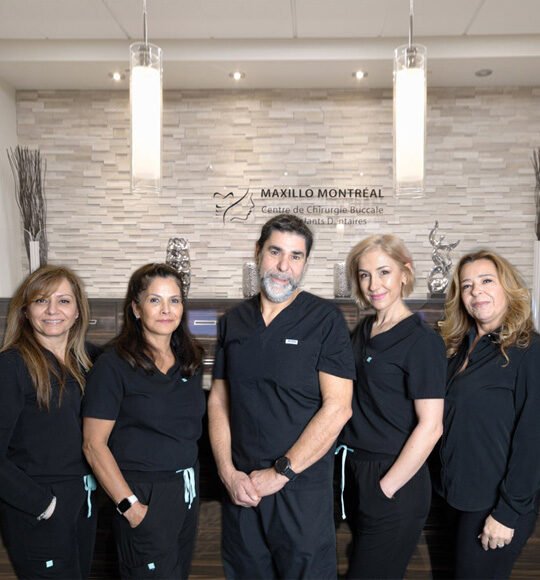
A dedicated clinical team
As highly qualified professionals who perform complex surgical procedures and administer anesthesia, our assistants and nurses are an integral part of our team.
They work alongside the surgeon to provide the best possible care and contribute to patient examinations and diagnoses. They provide a calming and supportive environment for our patients, comfort them during treatments, and advise them on what to expect and what to do in the post-operative days.
Our office staff is the frontline and equally important to our patients' care. They are friendly, courteous, and always ready to warmly welcome both returning and new patients.
They ensure that patients feel comfortable and relaxed during their stay, in addition to organizing and scheduling appointments and follow-up visits at the most convenient times.
Our team speaks several languages, including French, English, Greek, Russian, Romanian, Moldovan, and Spanish.
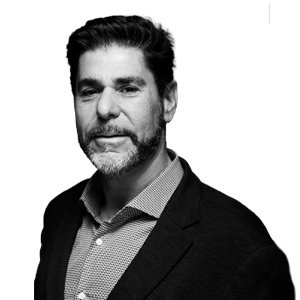
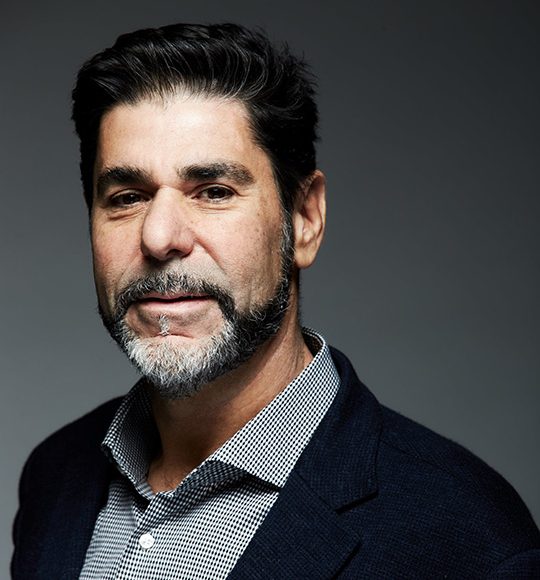
Dr. Dennis Kaloyannis
Oral and Maxillofacial Surgeon
Dr Kaloyannis received his doctorate in dentistry from McGill University in 1993. He then went on to complete a multidisciplinary residency in dentistry at the Jewish General Hospital in Montreal. He completed his Oral and Maxillofacial Surgery training at Tufts University in Boston, Massachusetts in 1999.
Dr Kaloyannis then returned to Montreal and has been in private practice serving the West Island community ever since. He is a faculty lecturer at McGill University and is involved in teaching the residents. He is affiliated with the Jewish General Hospital and St Mary’s Hospital in Montreal. Dr Kaloyannis is a certified fellow in Oral and Maxillofacial Surgery with the Royal College of Dentists of Canada. He is also a member of the American Association of Oral and Maxillofacial Surgeons and the ASCBMFQ.
This is the title
Services
Wisdom Teeth
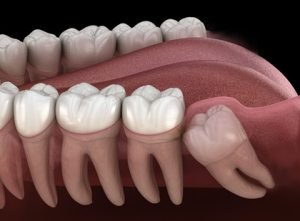
Third molars, or wisdom teeth, are the last teeth to appear in our mouths.
When space is insufficient or the eruption angle is unfavorable, the tooth may remain impacted or partially erupt through the gum.
They are then prone to complications such as infection, pain, damage to adjacent teeth, or the formation of cysts or tumors.
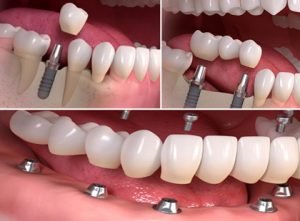
Implants
When a tooth is lost, it is recommended to replace it to maintain good teeth.
A dental implant is a type of artificial root made of titanium that is inserted into the jawbone. Once healed, the implant will be fused to the bone, allowing an artificial tooth to be inserted.
It is possible to replace one or more missing teeth, helping to improve the beauty of your smile and the efficiency of chewing.
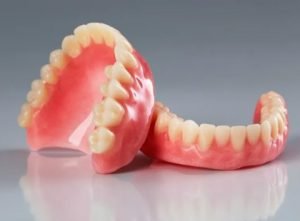
Pre-prosthetic Surgery
With the loss of natural teeth, changes occur in the gums. When the gums are uneven or have loose tissue, these can affect the comfort and stability of dentures.
Pre-prosthetic surgery is a series of minor surgeries performed on the gums and/or the bone beneath the gums. Once completed, it will allow for the creation of new, more stable, and comfortable dentures.
Oral Pathology
The oral cavity may be the site of abnormal changes in the gums, lips, cheeks, tongue, palate, or throat. These lesions can be benign or malignant.
In such cases, it is advisable to consult an oral and maxillofacial surgeon who will evaluate, diagnose, and treat these lesions.
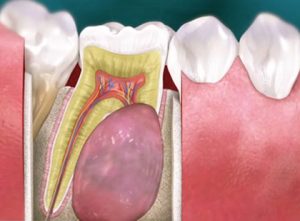
Apicoectomy
Sometimes, root canal treatment may fail due to a recurrence of infection. In these cases, an apicoectomy may be indicated.
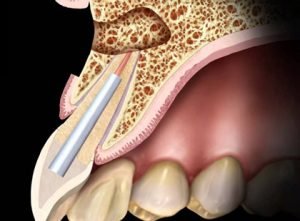
An apicoectomy is a surgical procedure that involves removing the tip of the affected tooth's root and curing out the infection to allow the affected area to heal and preserve the tooth.
Sedation
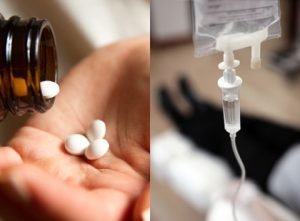
Most surgical treatments offered at our clinic can be performed under local anesthesia. However, in more complex cases or when the patient wishes to remain unaware of the procedure, we can perform the procedure under general anesthesia or intravenous sedation.
Using medication injected into a vein, we can achieve a deep state of relaxation and drowsiness, and upon awakening, with no memory of the procedure.
3D Imaging
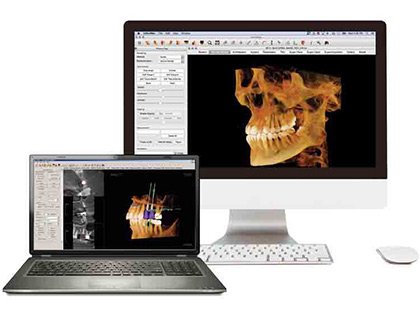
Computerized tomography (CT) is used for:
- Diagnosis and treatment of jawbone cysts and tumors
- Identifying the location of impacted teeth
- Assessing the proximity of the third molar to the inferior dental nerve
- Assessing whether there is adequate bone for dental implant insertion
Patient care
Preparation Before Oral Surgery
To facilitate the procedure and make the healing period more comfortable, the following will help:
- Wear comfortable, loose-fitting clothing.
- Prepare soft food before surgery (e.g., jello, applesauce, popsicles, pudding).
- If you are having surgery under IV sedation, you must fast for 6 hours beforehand (do not eat or drink anything).
- If you are having surgery under IV sedation, you must be accompanied by someone, as you will not be able to drive a car or take public transportation home.
- If your health has changed since your last visit, or if you are taking any new medication, please let us know before surgery.
- If you wish, you may bring a selection of music of your choice with you to surgery.
- Please plan a few days off work for your recovery. If you were instructed to take medication before your surgery, please remember to take it one hour before your appointment.
- Surgery fees can be paid by Visa or Mastercard, cash, or debit card.
CANCELLATION POLICY
PLEASE NOTIFY US 48 HOURS IN ADVANCE OF ANY CANCELLATION, OTHERWISE YOU WILL BE CHARGED AN ADDITIONAL FEE.
If you have any questions, please do not hesitate to contact us.
Care Following Oral Surgery
If any complications or problems arise, please contact the Institute staff immediately at 514-542-3368 between 9:00 a.m. and 4:30 p.m.
On the day of surgery:
- Maintain gentle pressure on the gauze pad placed on your teeth for one hour.
- In case of prolonged bleeding, continue the same treatment or replace the pad with a moist tea bag.
- Do not lie down or sleep without supporting your head with two or three pillows.
- Apply an ice pack for 15 minutes, wait 30 minutes, then repeat the treatment.
- Drink or eat only cold or warm foods, such as ice cream and Jell-O.
- Avoid all hot foods and liquids.
- Use petroleum jelly to soothe chapped lips.
- AVOID OVEREXERCISE.
The following days:
- Gently brush your teeth after meals, avoiding the operated area and the stitches.
- Rinse your mouth and bathe the operated area four to five times a day with a glass of warm water to which you have added 1/2 teaspoon of salt.
- The stitches dissolve in 3-4 days, unless otherwise advised.
Medications
IBUPROFEN (orange oval tablet)
Take 1 tablet before or immediately after surgery. Thereafter, take 1 tablet every 6 to 8 hours as needed.
OXYCOCET / EMPRACET (white round tablet)
Take every 4 hours as needed for pain. If you are also taking ibuprofen, only use it if ibuprofen is not enough to relieve the pain.
AMOXICILLIN / CLINDAMYCIN (yellow/red capsule) (purple/blue capsule)
To be taken before or immediately after surgery. Take 1 tablet every 8 hours.
Depending on the severity of the procedure, the following symptoms may normally occur:
Swelling: Most pronounced on the 2nd or 3rd day after surgery; it will gradually decrease.
Discoloration: Blue, black, or yellow; it may appear in some areas.
Bleeding: Very light, may last a few days.
Discomfort: Difficulty opening your mouth for a while.
Nausea/vomiting: May occur due to medications. Stop taking narcotic medications. You may take Gravol and begin eating food with clear liquids.
MONTHLY PAYMENT OPTIONS
Thanks to our Canadian financing partner Beautifi, we offer financing options starting at 0% interest for your dental treatments, making care more accessible. Applying does not affect your credit score.
*: Minimum amount: $1,000. Subject to credit approval. Administration fees may apply. Subject to credit approval. Conditions apply.
For professionals
Doctor Referral Form
If you are a doctor and would like to refer one of your clients, please complete this form.
Contact information
3400 du Marché, bureau 202Dollard-des-Ormeaux, Québec, Canada, H9B 2Y1
Business hours
- Monday Closed
- Tuesday 9:30-3:30
- Wednesday Closed
- Thursday 9:30-4:00
- Friday 10:30-4:00
Special schedule
- October 12th Closed
Your oral and maxillofacial surgeons